
Beeswax and soy wax are two of the most popular natural waxes for candle making, soap crafting, and skincare. Both come from natural sources, both are easy to work with, and both have loyal followings among makers. But they behave very differently in practice, and the right choice depends entirely on what you are making.
If you run a small skincare line, hand-pour candles, or make soap and bath products in Western Australia, understanding these differences will save you time, money, and a lot of trial and error. Here is a practical, maker-focused comparison of beeswax versus soy wax.
What Each Wax Brings to the Workbench
Beeswax is a natural byproduct of beekeeping. It is produced by honeybees to build the honeycomb that shelters their colony, and it has been used for thousands of years in everything from candles to cosmetics. It has a naturally warm, honey-like scent and a firm, slightly tacky texture that makes it ideal for balms, salves, and lotion bars.
Soy wax, by contrast, is made from hydrogenated soybean oil. It is a vegetable-based wax that was developed as a renewable, plant-derived alternative to paraffin. It has a smooth, creamy appearance, holds scent well, and is a favourite for container candles and tarts because it melts evenly and clings to the sides of jars.
Both waxes fit comfortably into the “natural ingredients” category, but they come from very different supply chains and behave differently at every stage of the making process.
Beeswax vs Soy Wax: Scent Throw
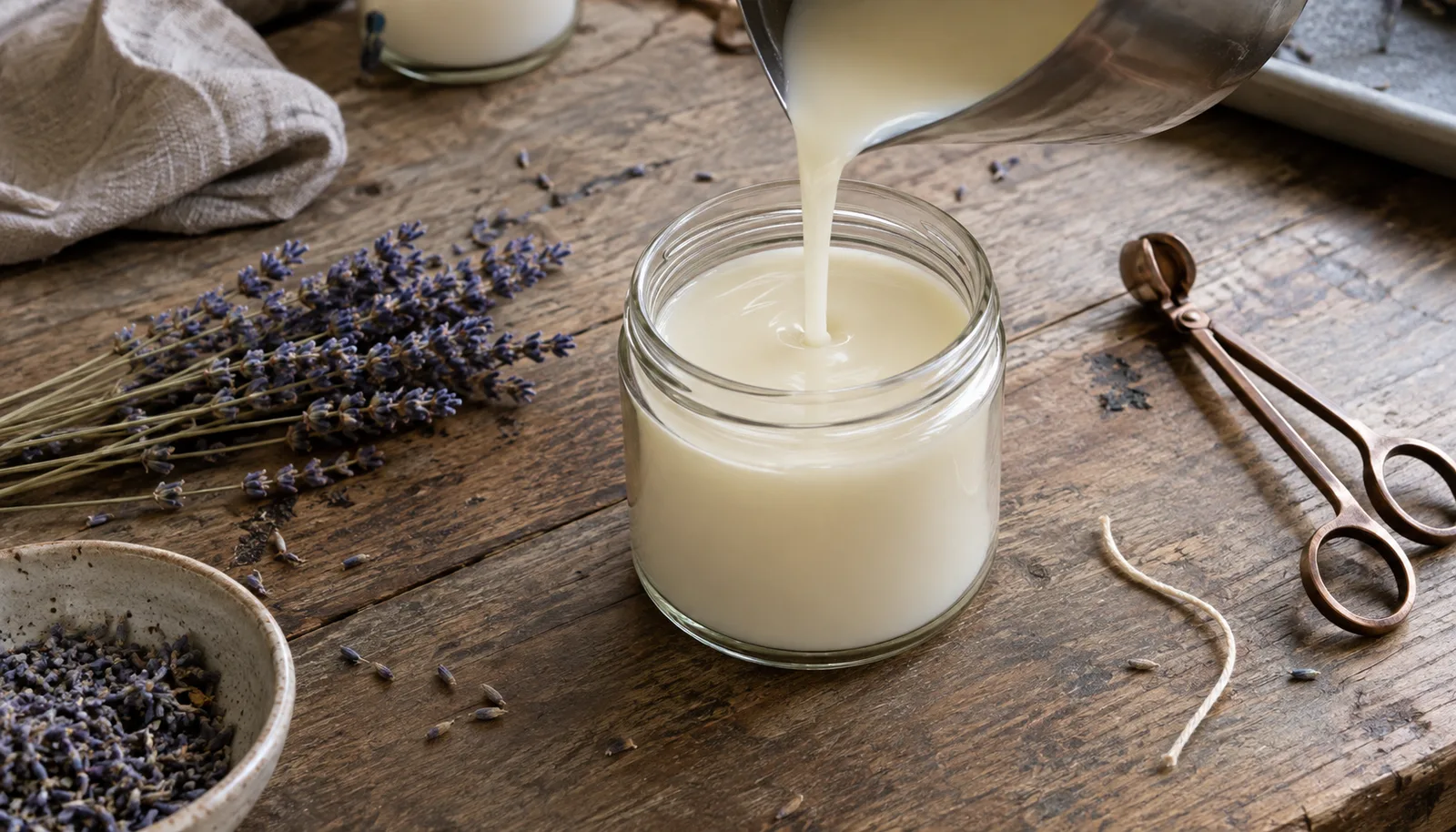
Scent throw is one of the first things candle makers compare. Cold throw is the fragrance you smell from an unlit candle; hot throw is the scent released while it burns.
Beeswax has a naturally sweet, subtle honey aroma all on its own. Because it is already fragrant, it can mask or compete with added essential oils, so makers often use it at lower fragrance loads or blend it with other waxes. Its scent throw is generally lighter and more delicate.
Soy wax is more of a blank canvas. It has very little natural odour, which means your added fragrance comes through clearly. Soy is widely praised for a strong, clean hot throw, especially when paired with fragrance oils designed for candle making.
For makers using essential oils, soy’s neutral base is often easier to work with because the oil you add stays the hero.
Beeswax vs Soy Wax: Burn Time and Performance
Burn time is a major consideration for candles, and here the two waxes part ways.
Beeswax is dense and slow-burning. A beeswax candle typically burns longer than a soy candle of the same size, and it produces a brighter, cleaner flame with very little soot. It also releases negative ions as it burns, which some people believe helps purify the air — though this claim is not independently verified and should be treated with caution.
Soy wax burns at a lower temperature and is softer, so it tends to have a shorter burn time than beeswax. It also has a lower melting point, which is why soy is such a reliable choice for container candles: it melts into a smooth, even pool that reaches the edges of the jar. The trade-off is that soy candles can develop “frosting” or a grainy surface over time, especially in temperature changes.
If long burn time is your priority, beeswax wins. If you want an even, contained melt in a jar, soy is hard to beat.
Beeswax vs Soy Wax: Skin Care Applications
Both waxes appear in natural skincare, but they serve different roles.
Beeswax is a skin-loving ingredient. It is naturally emollient, forms a protective barrier on the skin, and helps lock in moisture without feeling greasy. This makes it a staple in balms, salves, lip balms, and lotion bars. It also adds structure and a firm, creamy texture that helps products hold their shape at room temperature.
Soy wax is less commonly used directly on skin as a barrier ingredient. It is more often found in body butters and massage candles, where it melts into a warm oil that can be massaged into the skin. Because it is soft and low-melting, it is not ideal as the main structuring agent in a solid balm — you would usually pair it with a firmer wax like beeswax.
For soap and candle making, bath bombs, and skincare products, both are valuable raw ingredients, but they are not interchangeable in a recipe.
Beeswax vs Soy Wax: Sustainability and Sourcing
Sustainability is a growing concern for many makers, and both waxes have something to say on the topic.
Beeswax is a renewable byproduct of beekeeping, which means no bees are harmed to produce it, and it actually supports pollinator populations when sourced from responsible beekeepers. It is fully biodegradable and naturally compostable. The main sustainability question is supply — because it depends on hives, it is a finite, seasonal product, and prices can be higher.
Soy wax is also renewable and biodegradable, and it is grown as an agricultural crop. However, large-scale soy farming has been linked to deforestation and land-use concerns in some growing regions, so sourcing matters. Certified sustainable or non-GMO soy is available but often costs a little more.
As a wholesaler, Range Products sources a wide range of raw ingredients, and for makers who value traceability, it is always worth asking where your wax comes from and how it is produced.
Which One Should You Choose?
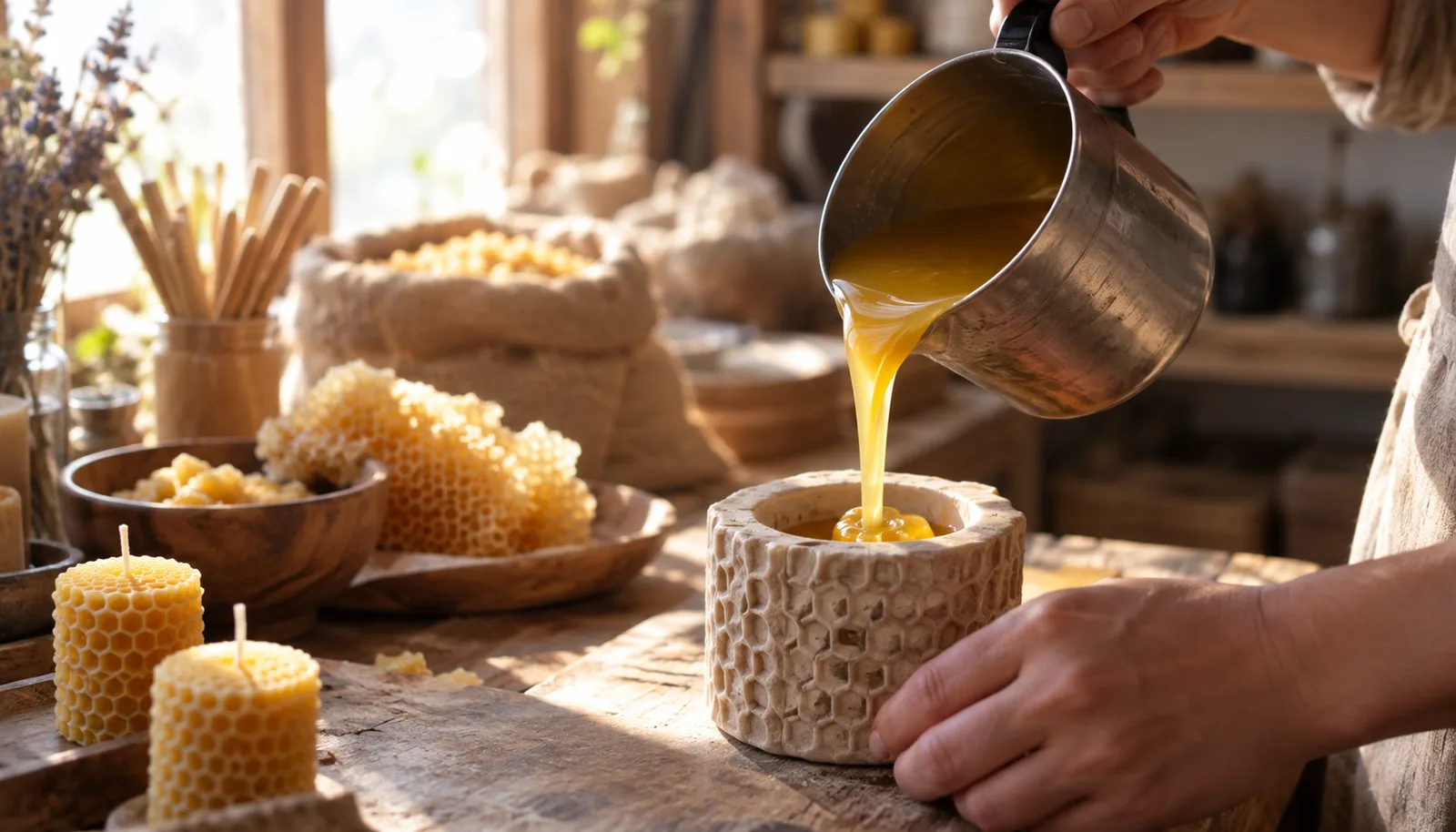
There is no single right answer — it depends on your project.
Choose beeswax if you want a long-burning, naturally fragrant candle, or if you are making solid balms, salves, and lotion bars that need structure and skin-conditioning benefits. It is also a great choice if you prefer a product with minimal processing and a natural honey scent.
Choose soy wax if you are making container candles or tarts and want a clean, even melt with a strong scent throw. It is also a good option if you want a vegan, plant-based wax and a soft, creamy finish.
For many makers, the best approach is to keep both on hand and use them for different jobs — or blend them together to get the best of both worlds. Beeswax can firm up a soft soy candle or add structure to a body butter, while soy can soften the texture of a pure beeswax product.
If you are just starting out, Range Products offers a varied catalogue of base products, carrier oils, and raw ingredients for soap and candle making, so you can experiment with both waxes and see which suits your workflow. With wholesale pricing and 30+ years in the essential oils trade, it is an easy place to stock up for your next batch.
A Final Word on Quality
Both beeswax and soy wax are excellent, natural choices, and neither is objectively “better” than the other. The right wax is the one that fits your product, your process, and your customers’ expectations.
Because every batch behaves a little differently, keep notes on how each wax performs in your recipes — burn time, scent throw, texture, and appearance. Over time, you will develop a feel for which wax works best for each product in your range, and your customers will thank you for it.